1
Opening frame
What Kind of Shadow Work Is This?
What the Pratyabhijñā tradition offers, and does not offer, to contemporary work with a fragmented self.

A Tantric approach to shadow work. Reimagine the inner critic through the lens of Pratyabhijñā, and leave with a portable three-movement practice from the Trika lineage.
2.5-hour workshop · a practice to keep · start any time
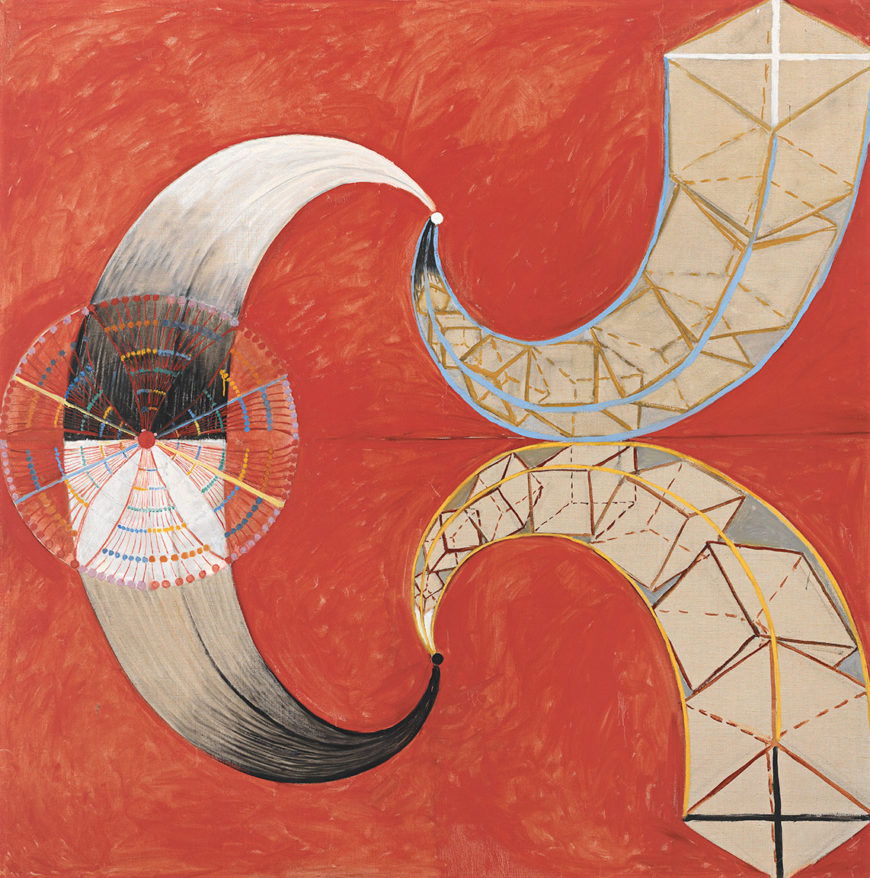
The “inner critic” is a familiar figure: the part that withholds, defers, betrays the work just as it nears completion. The inherited frame for working with it is depth psychology, inspired by Carl Jung, in which shadow is disowned material to be recovered, heard and metabolized back into a more whole self. It is a powerful frame, and it has done real work for contemplative communities.
But it carries an ontology the Recognition tradition does not share: a fragmented self whose scattered pieces must be reassembled. Pratyabhijñā, the philosophy of recognition developed by Utpaladeva and Abhinavagupta in 10th–11th century Kashmir, begins elsewhere. There is no fragmentation to repair, because the consciousness showing up as the saboteur is the same consciousness doing the looking.
The saboteur is not a part of you. It is one of the shapes the whole of you is currently performing.
Why the Pratyabhijñā tradition rejects the fragmentation model of self behind most contemporary shadow work.
The Trika understanding of contraction, and how the saboteur arises as a shape of your own śakti.
Continuous reflective tracing: the cognitive operation by which recognition occurs.
The classical practice of outward gaze and inward attention, applied to disowned material.
How to tell the two apart, and why the difference matters in practice.
A five-to-seven-minute, three-movement practice from the Vijñāna Bhairava and the wider Trika lineage.
What the Pratyabhijñā tradition offers, and does not offer, to contemporary work with a fragmented self.
Utpaladeva and Abhinavagupta on cit, vimarśa and śakti, and why the saboteur is already a form of self-aware consciousness.
How the same awareness that recognizes itself also performs the operation of self-limitation, and what this means for the figures that arise from it.
Sthāna-vicāra (localization), bhairavī-mudrā (outward gaze, inward attention) and anusandhāna (the recognition itself), with debrief between each.
Q&A and conversation: carrying the practice into the moments when the saboteur arises.
This is not a workshop on managing the saboteur, nor a substitute for therapy. The Pratyabhijñā tradition holds that there is no part of you that is not already, in some mode, knowing itself, and that the work is not to bring awareness to the contracted figure but to recognize the awareness of it as always already itself.
So how does this help with what arrives as the “inner saboteur”? You’ll leave with a five-to-seven-minute practice for when a saboteur episode arises in daily life: not a technique for managing it, but a practice of recognizing what the saboteur already is, and what it has to say beneath the noise.


Founding Director, Embodied Philosophy
Meditation teacher, writer, philosophy educator, and Founding Director of Embodied Philosophy. His guiding mission is to re-imagine the modern role of the yoga teacher in alignment with the teachings, texts and traditions of yoga’s profound history.
Jacob is a doctoral candidate at the University of Oxford, researching Pratyabhijñā philosophy with Diwakar Acharya and Monima Chadha. He holds an MPhil in Classical Indian Religions from Oxford, an MA in Philosophy from the New School for Social Research, and an MSc in Political Theory from the London School of Economics. He received dīkṣā into a Tantric form of meditation in 2015, studies with Kashmir Śaivism scholar-practitioner Paul Muller-Ortega, and is a devoted practitioner of the Śaiva-Śākta darśana.
A workshop like this would usually be priced at $249. We offer it by donation so that anyone who wants to study these teachings can. If you’re in a more fluid financial position, you help subsidize those who aren’t. No one is turned away for lack of funds.
Covers your place and helps fund a scholarship for someone who needs it.
A meaningful offering that honors the exchange and keeps these teachings open.
Pay what you can, from $1. Your participation is the offering.
You’ll enter your amount at checkout. Every offering receives the full workshop.
Refund requests within 30 days are fully honored.
No. It is a philosophical and contemplative workshop, not a substitute for therapy. It offers a different frame for shadow work and a practice drawn from the tradition itself.
No. The workshop introduces the key ideas of Pratyabhijñā from the ground up, and every Sanskrit term is explained.
You get immediate access to the full recorded workshop. Watch at your own pace; access does not expire.
Choose the amount that fits your situation at checkout. The tiers are a guide: larger offerings help fund scholarships, and no one is turned away for lack of funds. Everyone receives the same course.
You’ll receive an email right away with your access details. If anything goes wrong, reply to that email and our team will help.
Refund requests made within 30 days of purchase are fully honored. Write to hello@embodiedphilosophy.com and we’ll issue your refund within 5 business days.
pratyabhijñā
A Tantric approach to shadow work.
Enroll — pay what you canWant to keep going? Wisdom School Plus opens our full library of learning pathways and certificate programs.