On demand · Pay what you can

The Tibetan Book of the Dead

A four-module course with Andrew Holecek on the most famous guide to dying ever written, and what it can teach us about how to live.

4 modules · 2 meditations · 3 bonus talks · start any time

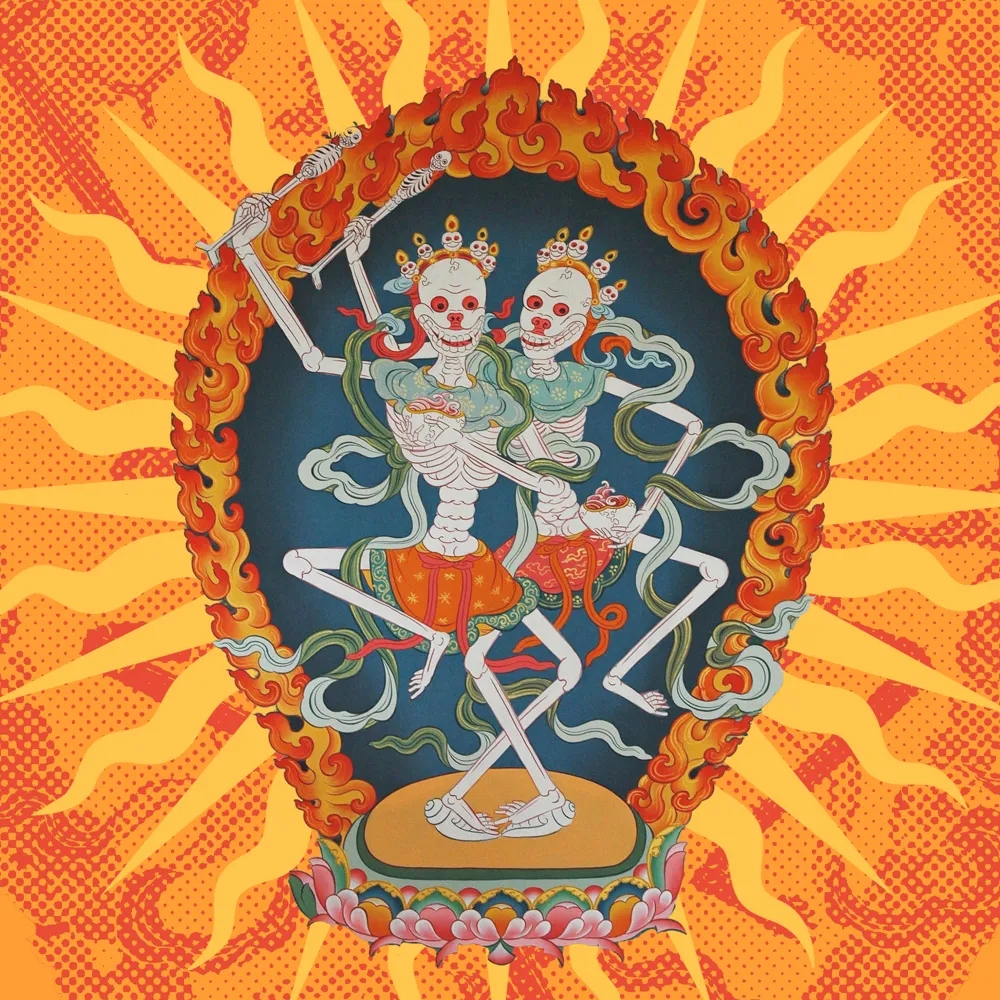
The Citipati, two dancing skeletons, framed by flames in a Tibetan painting
49
Days between death and rebirth

The Bardo Thödol, “liberation through hearing in the intermediate state,” is read aloud to the dying and the dead in Tibet. In the West it became known as The Tibetan Book of the Dead, and it has been a companion to seekers, psychologists and caregivers for a century.

It is, at heart, a meditation manual. It describes the bardos, the “intervals” that await us at the end of life, and it shows how practice now prepares us for them. Bardos are everywhere: every ending is a small death, and every small death is a chance to rehearse.

Death is something you can practice now. Its other name is letting go.

What you’ll learn

A book of the dead that is really a book of life

Andrew “translates” this ancient masterpiece into contemporary terms, without flattening it, and shows its immediate application in modern life.

Meet death without dread

Work directly with the fear of dying through teaching and guided meditation, rather than avoiding it.

Learn the map

The three death bardos and the stages of dissolution: a “GPS” for a journey that otherwise feels bewildering.

Practice now

Dream yoga and lucid dreaming as a nightly rehearsal, and the small bardos of everyday life as daily practice.

Be present for others

How to accompany friends, family and patients as they die, with steadiness and care.

The course

Four modules, three bardos

The course follows the journey through the Book itself: from its history, through the bardo of dying and the luminous bardo of reality, to the bardo of becoming.

1
Module 1

Origins & Hidden History

Who wrote the Book, who discovered it, and for whom was it composed? The central narratives that hold it together, the best translations and what is lost in them, and the “death principle” at its heart. Why meditation is “death in slow motion” that lets you die before you die.
2
Module 2

The Stages of Dissolution

The three death bardos, beginning with the painful bardo of dying. The five stages of outer dissolution and three of inner dissolution, the subtle anatomy of death, and how this map can help you, and those you love, when the time comes.

3
Module 3

Emptiness & Luminosity

The luminous bardo of dharmatā, where the nature of mind is revealed without the buffer of the body. Why its light frightens us, the role of projection, and who the peaceful and wrathful deities really are.

4
Module 4

Graceful Entry

The karmic bardo of becoming, where most of the 49 days are spent. Karma and habit, how dream yoga prepares us for “the dream at the end of time,” and how this bardo plays out in the end of a job, a relationship, or anything that ends.

Your teacher

Andrew Holecek

Andrew Holecek completed the traditional three-year Buddhist meditation retreat and teaches internationally on meditation, dream yoga and the art of dying. He is the author of Preparing to Die, Dream Yoga: Illuminating Your Life Through Lucid Dreaming and the Tibetan Yogas of Sleep, The Power and the Pain and Meditation in the iGeneration.

A member of the American Academy of Sleep Medicine, his work has appeared in Lion’s Roar, Tricycle, Parabola and Buddhadharma. He holds degrees in classical music and biology and a doctorate in dental surgery: a scholar-practitioner in every sense.

What’s included

Everything, at any offering

  • 4 pre-recorded lectures with Andrew Holecek
  • 2 guided meditations
  • About 10 hours of video
  • Course readings (PDF)
  • Bonus: Tibetan Book of the Dead: Decoding an Ancient Masterwork (2-hour workshop)
  • Bonus: The Neuroecopsychology of the Subtle Body
  • Bonus: Reason, Intuition & the Science of Buddhism, with Thupten Jinpa
  • Lifetime access, at your own pace
Pay what you can

Choose the offering that fits your life

A course of this depth would usually be priced at $147. We offer it by donation so that anyone who wants to study these teachings can. If you’re in a more fluid financial position, you help subsidize those who aren’t. No one is turned away for lack of funds.

Supporter

$147

Covers your place and helps fund a scholarship for someone who needs it.

Accessible

Any

Pay what you can, from $1. Your participation is the offering.

Enroll — choose your amount

You’ll enter your amount at checkout. Every offering receives the full course and all three bonuses.

Questions

Do I need a background in Buddhism?

No. Andrew teaches the text from the ground up and translates its vocabulary into contemporary terms. Longtime practitioners will find plenty of depth; newcomers will not be left behind.

How does the on-demand format work?

You get immediate access to all four modules, the meditations, readings and bonuses. Watch at your own pace; there are no live sessions to attend and access does not expire.

How does “pay what you can” work?

Choose the amount that fits your situation at checkout. The tiers are a guide: larger offerings help fund scholarships, and no one is turned away for lack of funds. Everyone receives the same course.

Is this course only about death?

The Book was written as a guide for dying, but it is equally a guide for living. Its teachings apply to anything that ends: a relationship, a job, a stage of life, even each night’s sleep.

Can I use this in my work as a chaplain, hospice worker or caregiver?

Yes. Module 2 in particular gives a detailed account of the dying process, and the course includes practical guidance on being present with others as they die.

What happens after I register?

You’ll receive an email right away with your access details. If anything goes wrong, reply to that email and our team will help.

Die before you die.

Study the art of dying, and live more fully.

Four modules. Three bardos. One lifetime to practice.

Enroll — pay what you can

Want to keep going? Wisdom School Plus opens our learning pathways and certificate programs, including Buddhist Psychology.